

How to Relax When You're Stressed?

Learning to relax!
Do you want/need to relax? Be aware that solutions exist and that finding comfort in discomfort is possible. This requires daily effort and goes through different stages:
- An awareness of our inner state and what is at stake for us. If you don't understand that your mind is disturbed and that your body is tense and sending you warning signals, it will be difficult for you to implement actions to relax.
- Understanding what is at stake for us: a work of introspection invites us to question why we feel such an emotion or why we had such a reaction. For this, writing is a formidable tool that allows us to put words to emotions by letting go of the mind.
- Working on oneself and implementing activities that will bring us well-being. This mainly involves better management of one's thoughts but also taking care of one's lifestyle in a holistic way. I know that it is possible to relax because after being out of balance, I learned another way of living and taking care of myself. I have regained energy and calm, and this is what I have been sharing since 2018 within companies for employees, managers and executives at l'IFY (French Institute of Yoga) in Paris. It is from this experience and my curriculum in Ayurveda that my mission is to transmit what worked for me. As we are all different, I do not promise you that these tools will work for you. I invite you to test them and apply the baby steps method and adjust if necessary.
My 10 Tips for Relaxing 🧘♀️
I sincerely share with you my relaxation methods that I practice and that rejuvenate me. If this resonates with you, great; otherwise, try other activities. It's essential to listen to yourself and trust yourself.
1. Breathe
The first tool I recommend for relaxation, and one I incorporate into my corporate training sessions, is breathing, because it's a tool that is accessible to everyone, effective quickly in 2-3 minutes, and doesn't require any special preparations.
On average, we breathe approximately 23,000 times a day. We therefore have 23,000 opportunities to influence our well-being. And that's significant!
In yoga, breathing is key. It allows us to better manage our vital energy. Breath accompanies movement.
There are several breathing exercises, and each technique has its own purpose: concentration, relaxing and refocusing, stress relief, energizing, regaining confidence, finding calm, and letting go.
🧘♂️ The one I recommend during periods of stress is the following breathing exercise: breathe deeply through your nose, then inhale for 3 counts and exhale for 6-8 counts. This technique activates the parasympathetic system and relaxes the body and mind. You can practice it with your eyes closed or open. The important thing is to be well-centered on yourself and your breath.
You can find our various breathing techniques in Gingerly rituals: discover our products
2. Hydrate your body
Drinking water is key to helping your body when it's under stress. Several reasons explain this:
- Water helps the body eliminate toxins present due to cortisol (the stress hormone). Cortisol is secreted in response to stress and is involved in many processes in the human body: regulating blood sugar and inflammation, and the metabolism of carbohydrates, proteins, and lipids. High cortisol levels, often caused by chronic stress (when stress is repetitive and intense), can lead to symptoms such as weight gain, fatigue, anxiety, sleep disturbances, and hormonal imbalances. These symptoms should not be taken lightly and should alert you to the messages your body is sending you.
- Water helps maintain optimal energy levels. As you can see, staying hydrated prevents physical and mental fatigue, as well as headaches.
3. Reduce your coffee intake (opt for a Gingerly herbal tea☕)
Coffee is not to be avoided if you are healthy. It is even recommended in some cases, such as for concentration. However, if you feel tired or stressed, or if you become irritable during periods of stress, it may be wiser to cut back on coffee. Coffee will accelerate stress and increase cortisol in the body, while the body needs the exact opposite: to slow down, take a break, relax, and relieve stress. A tip: if your mind guides you towards coffee, ask yourself if you really need it.
Discover our ritual infusions
Our Ritual Infusions


Organic Herbal Tea Gift Set LETTING GO ROUTINE
Organic Herbal Tea Gift Set LETTING GO ROUTINE


HARMONY Organic Comforting Infusion, SACHETS
HARMONY Organic Comforting Infusion, SACHETS
🌱 Cocoa Pods, Cinnamon, Ginger


Organic Anti-Stress & Wellness Herbal Tea Gift Set
Organic Anti-Stress & Wellness Herbal Tea Gift Set
4. Take time to write in the morning
Before you start your day and get polluted by intrusive thoughts, it can be interesting to practice journaling. In a few minutes, writing down your thoughts, emotions, and feelings will help you dissect what is going on for you. It's an incredible introspection technique that allows you to gain perspective.
5. Try out yoga
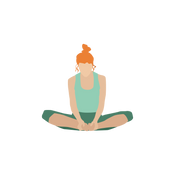
No need to practice for an hour every day, 10 minutes are enough to start. And besides, it's not a physical activity, and it's a way to live in harmony with oneself, others, and nature. The main goal of this practice is to reduce mental fluctuations. It's not about being flexible! Start by doing a few postures with conscious breathing, and you'll see the changes happen. You will gain more awareness and be better able to manage your well-being, thus feeling relaxation and calm.
Each Gingerly ritual offers chair yoga postures; simply scan the QR code on the back of each infusion. Discover Gingerly rituals
6. Get a massage
I can only recommend this body treatment, which brings rest and relaxation. There are several types of massages. My favorites are Thai massage for its pressure on the body and Abhyanga Ayurvedic massage, which restores body balance and energy. Be aware that you will come out full of oil. ☺There are several therapists; ask your friends and family for recommendations.
7. Practice mindfulness.
Mindfulness is practiced every day in daily activities. It's not just about meditating. You can experience this type of meditation while cooking, showering, or gardening. The important thing is to be present in what you are doing and fully aware of your senses.
8. Surround yourself with positive people
Our inner circle is precious and can shape our mindset on a daily basis. Surround yourself with kind people who share your values and could help you. And if you're feeling down, don't hesitate to call friends. Your energy can bounce back very quickly by expressing yourself and sharing.
9. Try visualization
Another way to relieve stress is to try visualization. The exercise is simple, here are the steps:
- Sit comfortably and take a few moments to breathe in and out.
- Imagine in your mind a picture of a resource place. This could be a place you know where you feel good or one you invent. Think of all the details.
- Visualize yourself in this environment and feel the relaxation gradually take over. Your body relaxes, your muscles loosen, you feel in complete harmony and calm.
- Take conscious breaths again, gradually return to the room where you are physically located, and gently open your eyes.
- When you feel the need to reduce stress again, think back to this place and you will observe your mind calm down.
10. Practice gratitude
One of my favorite activities is gratitude. You don't have to have a journal to do it. You can do it daily, out loud. The idea is to embrace everything we have (and I'm not talking about material possessions here) and appreciate what we have instead of dwelling on what we don't have, to avoid a mindset of scarcity. Whenever an event happens that brings you joy, saying thank you to life helps you stay in that energy of abundance.
How to calm your thoughts and mentally rest?
Every morning, choose your thoughts as you choose your clothes
This is the phrase I share with everyone I coach in business. It's striking and creates a moment of realization. The power of our thoughts is limitless. If we have negative thoughts, we will be in a negative energy state. Of course, these thoughts come naturally and are sometimes uncontrollable. We get stuck in a loop and the situation only takes on negative proportions.
We don't choose how our day will go. There will inevitably be undesirable events in your day; you cannot control that. However, you can control your thoughts and redirect your mindset.
Keeping a thought journal
An effective relaxation method that I really like is the thought log created by Dr. Lionel Coudron.
When stressed, take a notebook, note the date, the event, rate your stress level from 1 to 10 (with 1 being minimal stress and 10 being very strong), express the reaction (where it happens in your body, what sensation, emotion) then note your thought (what you tell yourself internally). This exercise allows you to become aware of your thoughts, which is already a first step.
Replace every limiting belief with a positive thought
Next, you will imagine a positive antidote thought that will help you break free from the spiral of stress. If the events recur, you will be able to gauge whether your stress level decreases and savor the progress that is gradually taking place. Always think more about the journey than the destination.